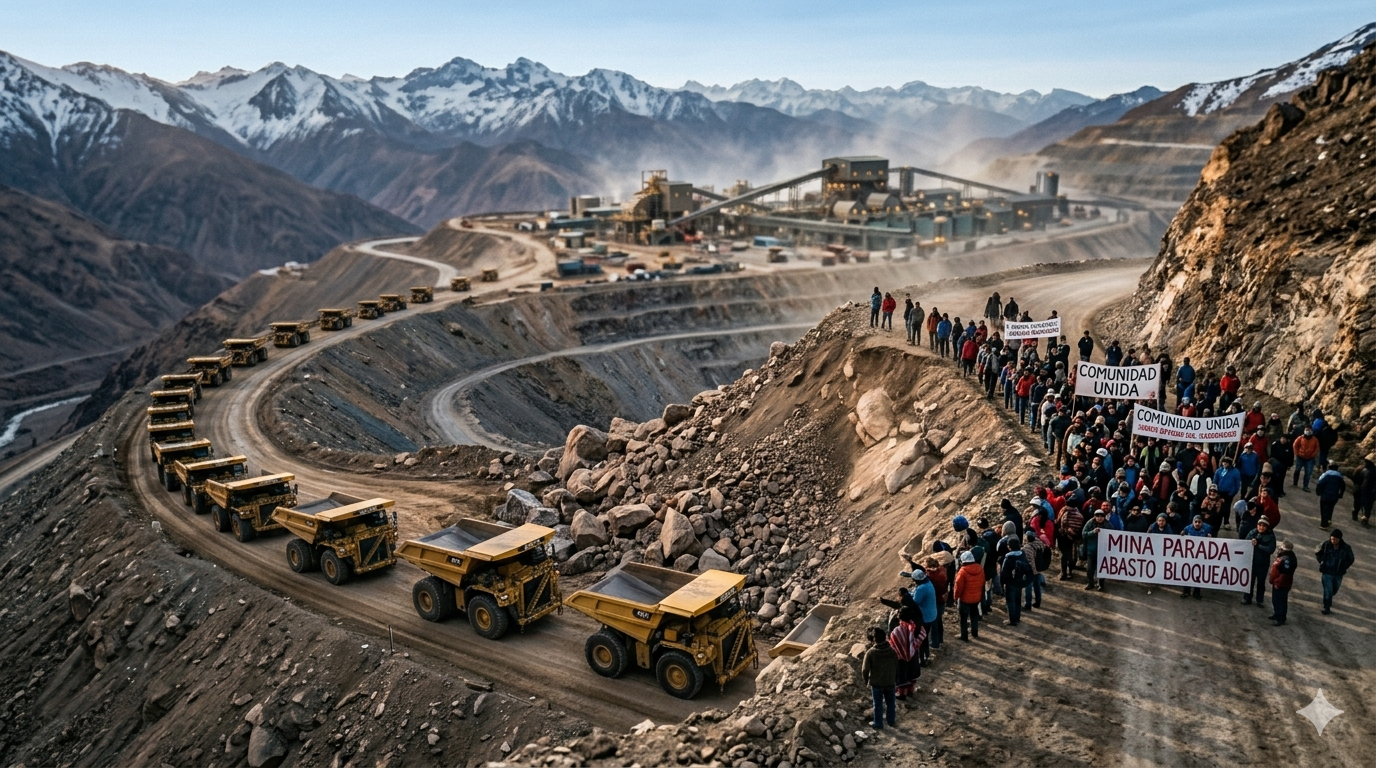
There's a paradox at the center of the energy transition few in the industry want to name aloud: the world needs more critical minerals to decarbonize, but the companies producing them have been losing efficiency on existing assets for years.
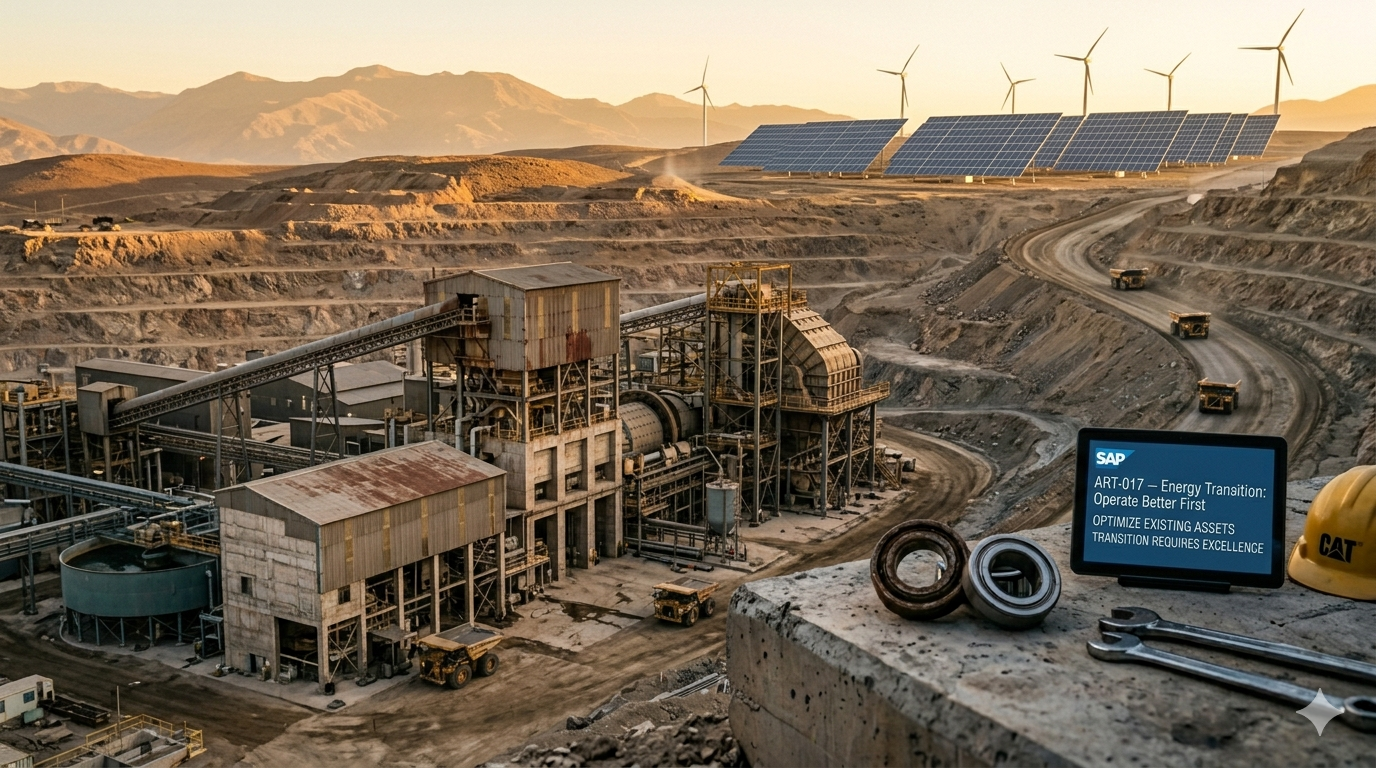
The answer isn't just building more mines. It's operating the ones you already have better.
The Transition Paradox
Every electric vehicle needs four times more copper than a combustion one. Renewable energy transmission networks demand massive quantities of copper, lithium, and rare earths. The energy transition could require double or triple current copper production by 2040.
But there's a structural problem: "rush-to-production" pressures are systematically compromising asset lifecycle planning (Global Mining Review). Companies accelerate construction, delay Operational Readiness, and start operations with competency gaps, incomplete documentation, and nonexistent maintenance strategies.
Chile's Real Problem
Codelco's production fell from 1.8 million tonnes in 2017 to 1.3-1.4 million tonnes in 2024. A 22-28% production loss in seven years while the world demanded exactly the opposite.
Chile's total production has stagnated between 5.2 and 5.7 million tonnes annually (COCHILCO). C1 cash costs rose from 130 to 170+ c/lb between 2018 and 2024. Ore grade declined from 0.9% to 0.6% between 2005 and 2023 — meaning 50% more material processed for the same copper.
Energy costs represent 20-30% of total OPEX in copper mining. Fleet electrification requires entirely new maintenance competencies most operations don't have today. Chile needs more than USD 12 billion in water infrastructure between 2022 and 2033. And Codelco carries net debt of USD 18-20 billion while structural projects exceed USD 40 billion with 20-30% overruns.
The problem isn't lack of capital. It's lack of operational efficiency in existing assets.
The Cost of Not Optimizing
Reactive maintenance — the "fix when it breaks" culture dominating many LATAM operations — costs 3 to 10 times more than preventive or predictive maintenance. Declining ore grades elevate OPEX per produced tonne even if operational efficiency stays constant. When operational efficiency also falls, the impact is exponential.
Companies without a maintenance strategy aligned with critical assets pay an "invisible fine" every day — in OPEX, equipment availability, response time, and every unplanned downtime hour.
No new project solves that problem. Only an existing asset optimization strategy does.
The Answer: Maximize What You Already Have
There's an enormous market gap: nobody seriously talks about optimizing existing assets.
EPCMs — Worley, Hatch, Ausenco — build plants. Their business is greenfield. Big strategy consultancies tell you to "digitally transform." They produce reports with global benchmarks. And they also leave.
At ValueStrategy Consulting we work in the space nobody occupies: implementing operational strategy in existing assets and brownfield expansions.
Operational Readiness for brownfield: OR isn't just for new mines. An expansion, major equipment replacement, or process conversion requires the same preparation rigor as a from-scratch startup.
Asset Management Strategy in 63 hours: A complete maintenance strategy — asset criticality, per-equipment strategies, spare parts requirements, ISO 55000 alignment. Not in weeks or months. In 63 hours with our proprietary tools, versus 500 hours traditionally. Quality guaranteed: 91/100 across 7 dimensions.
The difference between an operation running at 72% of design capacity and one running at 90%+ isn't new technology. It's well-executed operational strategy. In copper, that difference equals tens of millions of dollars per year in additional production — without building anything new.
If your operation isn't performing at the level it should, the problem is rarely geology. It's almost always operational strategy.
Schedule a meeting with the VSC team.
#VSC #ValueStrategyConsulting