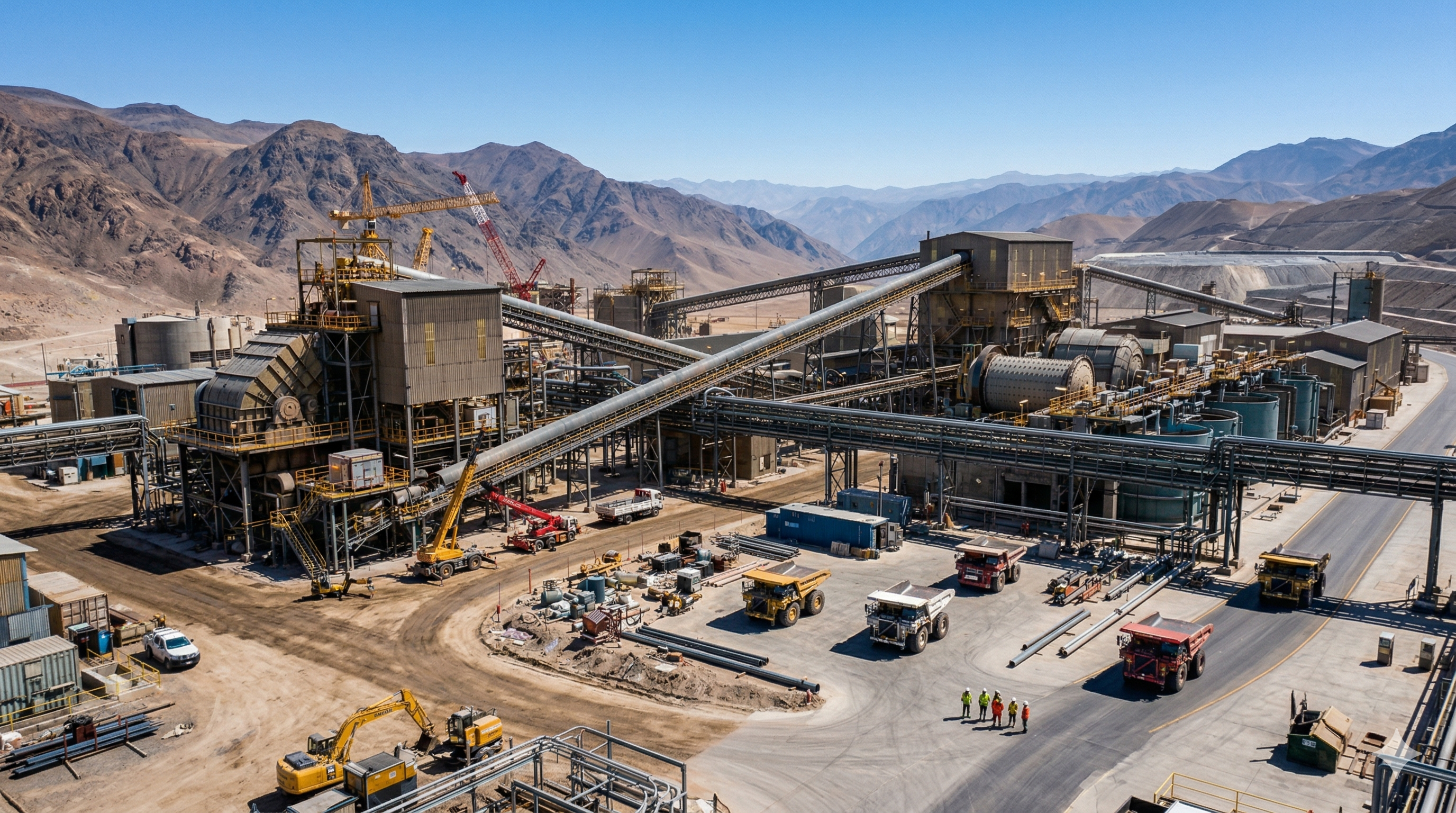
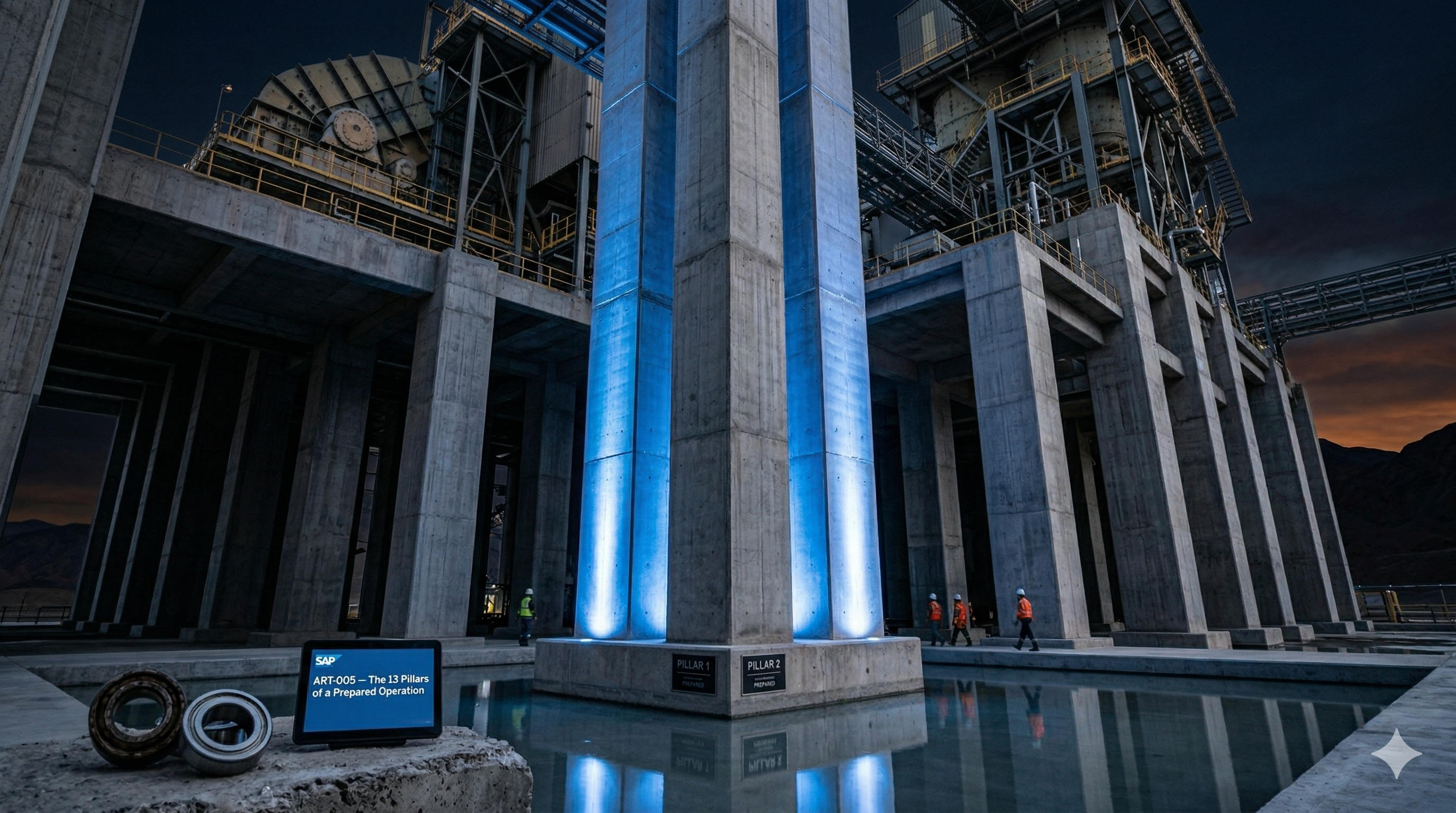
It's not an engineering problem. The plant works. The process is correct. The equipment is installed.
The problem is that nobody prepared the organization to operate the plant.
That's called Operational Readiness. And in most projects, it simply doesn't exist as a systematic discipline.
The Problem: The Epidemic of Failed Ramp-Ups
The numbers are consistent across all sources. 70% of megaprojects suffer delays of more than 12 months at ramp-up (McKinsey). The average cost overrun on capital projects in the extractive industry sits between 30% and 50% of the original budget (Engineering & Mining Journal). And what the reports don't say directly, but every commissioning manager knows, is that the main cause isn't engineering: it's the lack of operational readiness.
Let's look at three recent projects to understand the scale of the problem.
Quebrada Blanca Phase 2 (Teck, Chile): One of the largest copper projects of the last decade. Cost overruns exceeded USD 2 billion above the original estimate, with significant delays in ramp-up to nameplate capacity. A project that promised to transform Teck's position in the copper market became a costly lesson on the difference between building a mine and being ready to operate it.
Chuquicamata Underground (Codelco, Chile): The largest project in Codelco's history. The final budget exceeded USD 6 billion, with substantial delays against the original schedule. Transforming the world's largest open-pit mine into an underground operation is an extraordinary engineering feat. But the preparation to operate that new reality is a completely different challenge — and that challenge was underestimated.
Quellaveco (Anglo American, Peru): A world-class project with an extended ramp-up. Despite Anglo American's experience and available infrastructure, reaching nameplate capacity took considerably longer than planned. Every month of suboptimal ramp-up on a project of this scale represents production losses measured in tens of millions of dollars.
These are not poorly managed projects. They are projects executed by first-tier teams with access to the best engineering firms in the world. The pattern repeats because the problem is systemic, not individual.
The 5 Root Causes
The Institute for Asset Management and Australia's Asset Management Council documented the pattern precisely: maintenance strategies, spare parts, documentation, and trained personnel are frequently not in place at the time of handover. It's not negligence. It's that Operational Readiness isn't planned from the start — it's improvised at the end.
We break down the five causes that appear consistently:
1. Critical Documentation Gaps
More than 60% of industrial plants do not have complete SOPs at the time of startup (Deloitte). This means personnel must operate without clear procedures during the most critical period: the first weeks of commercial operation, when mistakes are most costly and most dangerous.
The P&IDs are there. The manufacturer's manuals are there. But the operational procedures adapted to this specific plant, in this specific context, with this specific team: they're not.
2. Unprepared Workforce
45% of projects report critical concerns about workforce readiness for Day 1 of operations (PwC). It's not just about hiring: it's about training, certifying, organizing roles, defining shifts, and creating the competency systems that enable safe and efficient operations.
The mining industry also faces a structural shortage of qualified technical talent. The mining engineer deficit grows year after year. Projects compete for the same shrinking pool of people with real commissioning experience.
3. Absence of OR Governance
Most projects don't have a systematically governed Operational Readiness framework. There are no readiness KPIs. No gate reviews with defined approval criteria. No specific OR manager with authority to stop commissioning if operations aren't ready.
When governance doesn't exist, OR becomes a checklist that everyone signs without reviewing. The result: entering commissioning with known gaps, hoping problems will resolve themselves during ramp-up.
They never resolve themselves.
4. Missing Maintenance Strategies at Handover
Most projects reach commissioning without implemented maintenance strategies. Without properly sized critical spare parts inventories. Without completed FMECAs. Without maintenance plans loaded into the CMMS.
Reactive maintenance — fixing when it breaks — costs 3 to 5 times more than planned maintenance (Gartner). In a new project, where equipment is still in its break-in period and failure modes are unknown, the cost of reactivity is exponentially higher.
5. Deficient Knowledge Transfer
The valley of death of handover — the period between when the project team hands over and the operations team takes control — costs between 5% and 15% of the project's total CAPEX (BCG). The critical knowledge generated during construction and commissioning: the design decisions, the problems solved, the modifications made, the failure modes identified. All of that lives in the heads of the project team. When they leave, it leaves with them.
"Corporate Institutional Amnesia" doesn't start when a veteran operator retires. It starts the day the project team leaves site without a structured transfer model.
What Should Exist
Systematic Operational Readiness isn't a conceptual novelty. The problem is implementation: how it's done, when it starts, who leads it, and with what tools.
Three principles define an OR that works:
First: OR begins in the conceptual phase, not at commissioning. When OR starts 6 months before startup, it's already too late. Most decisions that determine how easy or difficult it will be to operate have already been made. Changing them at that stage is costly and disruptive. OR must be a discipline parallel to plant design from day 1.
Second: OR must cover all functional areas of the operation. Not just maintenance. Not just documentation. A mining operation has multiple critical dimensions: asset management, staffing and competencies, operational procedures, contracts and suppliers, information systems, safety and environment, operational budget, among others. A partial approach creates gaps in the areas that weren't covered. And during ramp-up, every gap has a cost.
Third: deliverables must be implementable, not reports. An OR plan that lives in a PowerPoint is useless. Maintenance plans must be loaded into the CMMS. SOPs must be available in operational format. Maintenance strategies must export directly to the ERP. The difference between a paper OR and an OR that works is the quality of deliverables — and whether those deliverables are ready to use on Day 1.
The Intelligent Mine documents it directly: Operational Readiness assessments are typically not performed before commissioning of new systems. It's not that they're done poorly — it's that they mostly aren't done at all.
Results When Done Right
There is a brutal gap between how the industry performs OR today and what's possible when it's done systematically.
The traditional method requires 12 to 24 months and teams of 10 to 15 consultants. It's expensive, slow, and when the team leaves, they take the knowledge with them. The client is left with a pile of documents that age quickly.
At ValueStrategy Consulting we've demonstrated that it's possible to deliver a complete OR in 90-120 days with 2 to 3 people, with measured quality of 91 out of 100 across 7 dimensions. Not by sacrificing coverage — covering all critical functional areas of the operation. Not by sacrificing depth — delivering data ready to implement in SAP PM, not PDFs that nobody uses.
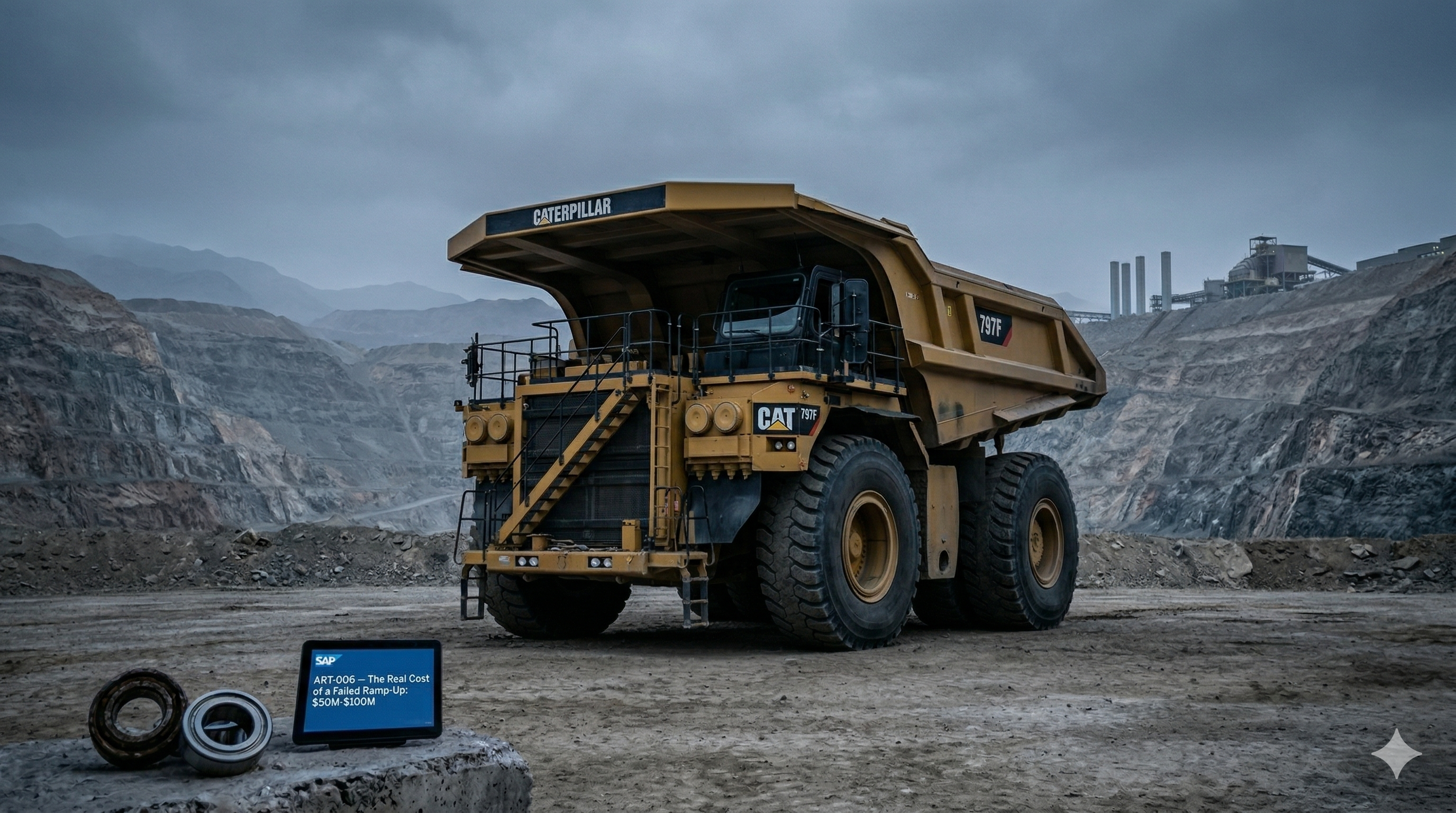
The economic impact is direct: projects with systematic OR report savings of USD 160,000 to USD 213,000 in first-year OPEX. But the number that matters most to a VP of Operations or Project Director isn't the accounting savings: it's how many months of suboptimal ramp-up are avoided. On a USD 1 billion project, one month of delay in reaching nameplate capacity represents USD 50 to USD 100 million in lost production.
OR is not a cost. It's the insurance that protects the return on the largest investment the organization will make in the next 10 years.
The Question You Should Ask Today
If your organization has a project under construction, in detailed design phase, or less than 24 months from commissioning, there is a critical question: do you have a structured Operational Readiness program, with governance, with a responsible owner, with defined deliverables for each functional area?
If the answer is no — or if the answer is "we're working on it" without a specific plan — the risk already exists. And every week that passes without a systematic OR is a week in which gaps accumulate and the cost of closing them rises.
Projects don't fail at ramp-up because of bad luck. They fail because the risk was there months before, visible to those who know where to look.
Ready to talk about your operation?
30 minutes. Your specific case. Honest assessment.
Schedule a Meeting with VSCSources
- McKinsey & Company: "Delivering Large-Scale IT Projects on Time, on Budget, and on Value" — megaproject delay statistics
- Engineering & Mining Journal (E&MJ): Capital projects performance benchmarks, historical overruns 30-50%
- Deloitte: "Startup and Commissioning" industry benchmarks — incomplete documentation in industrial plants
- PwC: "Capital Projects & Infrastructure" — workforce readiness concerns
- Gartner: Maintenance cost benchmarks, reactive vs. planned cost differential
- BCG: "Avoiding the Valley of Death in Capital Projects" — CAPEX loss in handover phase
- Asset Management Council (Australia): Operational readiness assessments and handover best practices
- Intelligent Mine: Operational readiness and commissioning systems research