76% of industrial executives already see agentic AI as a coworker, not a tool. That's what a survey by MIT Sloan and BCG reveals, covering 2,102 executives across 21 industries and 116 countries.
But there's a problem.
Most of heavy industry still treats AI as a chatbot.
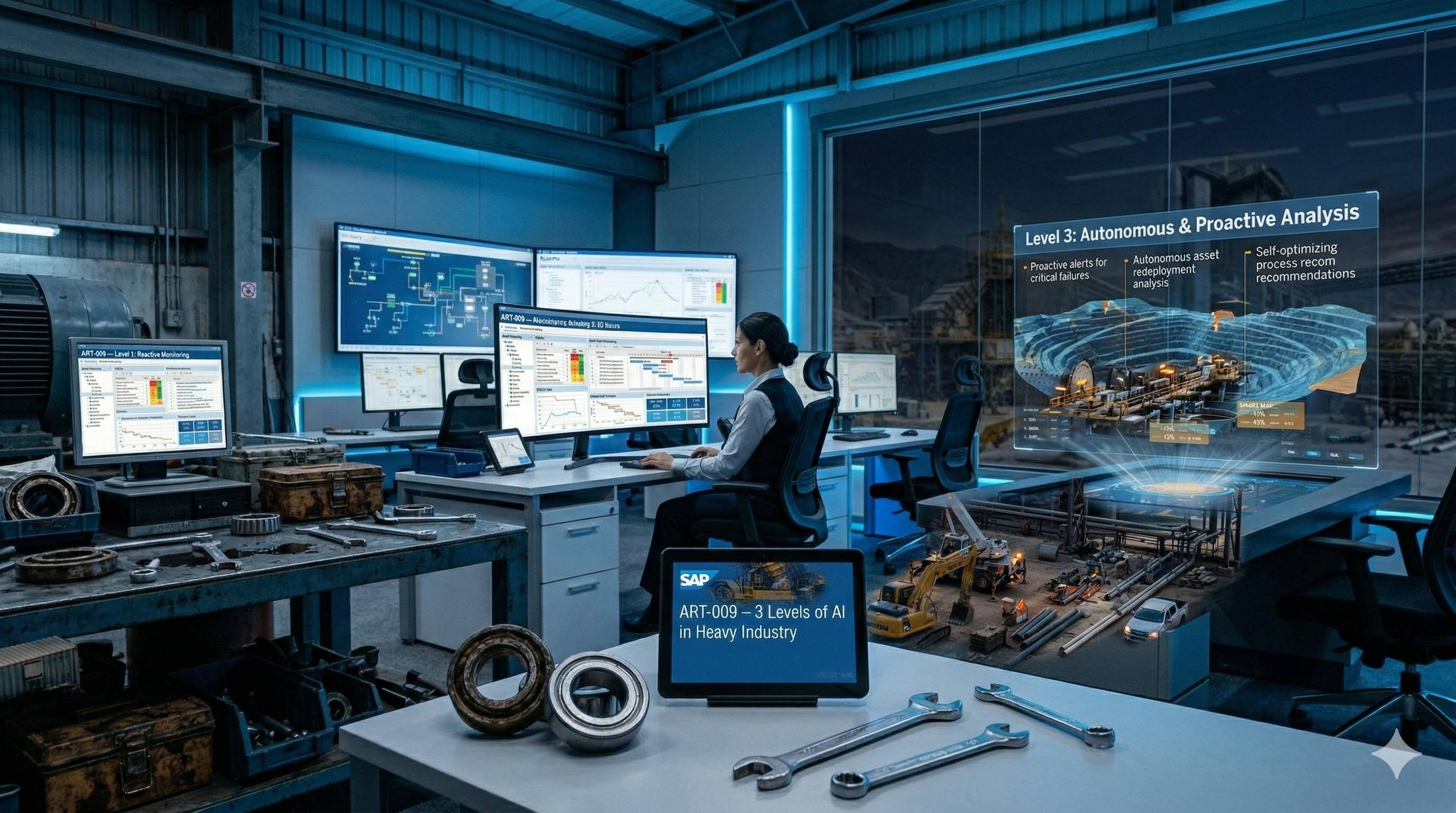
There are three levels of AI available today for industry. The gap between Level 1 and Level 3 isn't measured in technology — it's measured in value generated, hours recovered, and decisions made with real data instead of intuition.
Level 1: Chatbots — AI That Waits for Instructions
Most industrial companies that have "adopted AI" are here.
A chatbot is reactive by nature. It waits for someone to ask something. If nobody asks, it does nothing. If the question is vague, so is the answer.
ChatGPT doesn't know what an FMECA is. It doesn't know the ISO 55000 standard. It can't validate a maintenance plan against mining industry best practices. When an industrial company uses a generic chatbot for operational work, what it gets is plausible text. Not validated analysis.
According to Gartner, only 48% of digital initiatives meet their objectives. Agentic AI, according to Gartner, will fall into the "trough of disillusionment" in 2026.
Level 2: Copilots — Better, But Insufficient
Level 2 represents a real leap from Level 1. Copilots are domain-specialized tools that actively assist the professional using them. They're not generic. They know the industry context and can integrate with operational data.
Reference examples already exist: XMPro with its MAGS platform, SLB Tela, Baker Hughes Cordant — copilots for oil and gas operations. Useful tools. Specialized. With real integrations.
But still reactive. A copilot responds when asked. The copilot doesn't know there's a critical gap in Line 3's preventive maintenance strategy if nobody asks about Line 3.
The scarcest resource in any industrial operation isn't software. It's the attention of senior engineers.
75% of knowledge workers already use AI at work (Microsoft/LinkedIn). But using it doesn't equal obtaining differential value from it. MIT Sloan researchers note: "once AI use is ubiquitous, it will elevate entire markets but will not uniquely benefit any single company."
Level 2 is better than nothing. But in an industry where less than 5% of data generated by mining equipment is effectively analyzed (Intelligent Mine), expecting engineers to ask the right questions at the right time is a strategy with a very low ceiling.
Level 3: Proactive Agents — AI That Executes
Here everything changes.
A proactive agent doesn't wait for instructions. It analyzes the state of an operation, identifies gaps, generates solutions, and alerts the human team with actionable information. It does all of that without being asked. Because it works continuously.
| Characteristic | Chatbot (L1) | Copilot (L2) | Proactive Agent (L3) |
|---|---|---|---|
| Initiative | Reactive | Reactive | Proactive |
| Specialization | Generic | By domain | By operational discipline |
| Execution | Responds | Assists | Executes and alerts |
| Human role | Asks questions | Validates suggestions | Decides and approves |
| Status in heavy industry | Majority of companies | Sector leaders | Vanguard |
A Level 3 system specialized in maintenance doesn't wait for the Reliability Manager to open a dashboard. It analyzes the failure history, identifies assets with highest risk of critical failure in the next 60 days, generates corresponding FMECAs with RCM decision logic applied, and presents the result to the responsible engineer for validation.
This isn't simple task automation. It's expert capacity amplification.
Why Most Companies Don't Reach Level 3
It's not a technology access problem. Three real gaps prevent the jump:
1. Insufficient data quality — An agent is only as good as its data. In most mining operations, asset data is fragmented across systems that don't talk to each other. Less than 5% of mining equipment data is analyzed.
2. Lack of discipline specialization — Generic AI doesn't solve operational problems. A maintenance agent needs to understand FMECA, RCM, ISO 55000, and asset criticality logic. That specialization isn't pre-installed on any commercial platform.
3. Human validation culture — Industrial organizations rightly don't trust systems that "decide alone." A wrong maintenance decision isn't a software bug — it can cost lives. The correct model is agents that execute analytical work and humans who validate, contextualize, and decide.
The Human-Agent Model: Amplification, Not Replacement
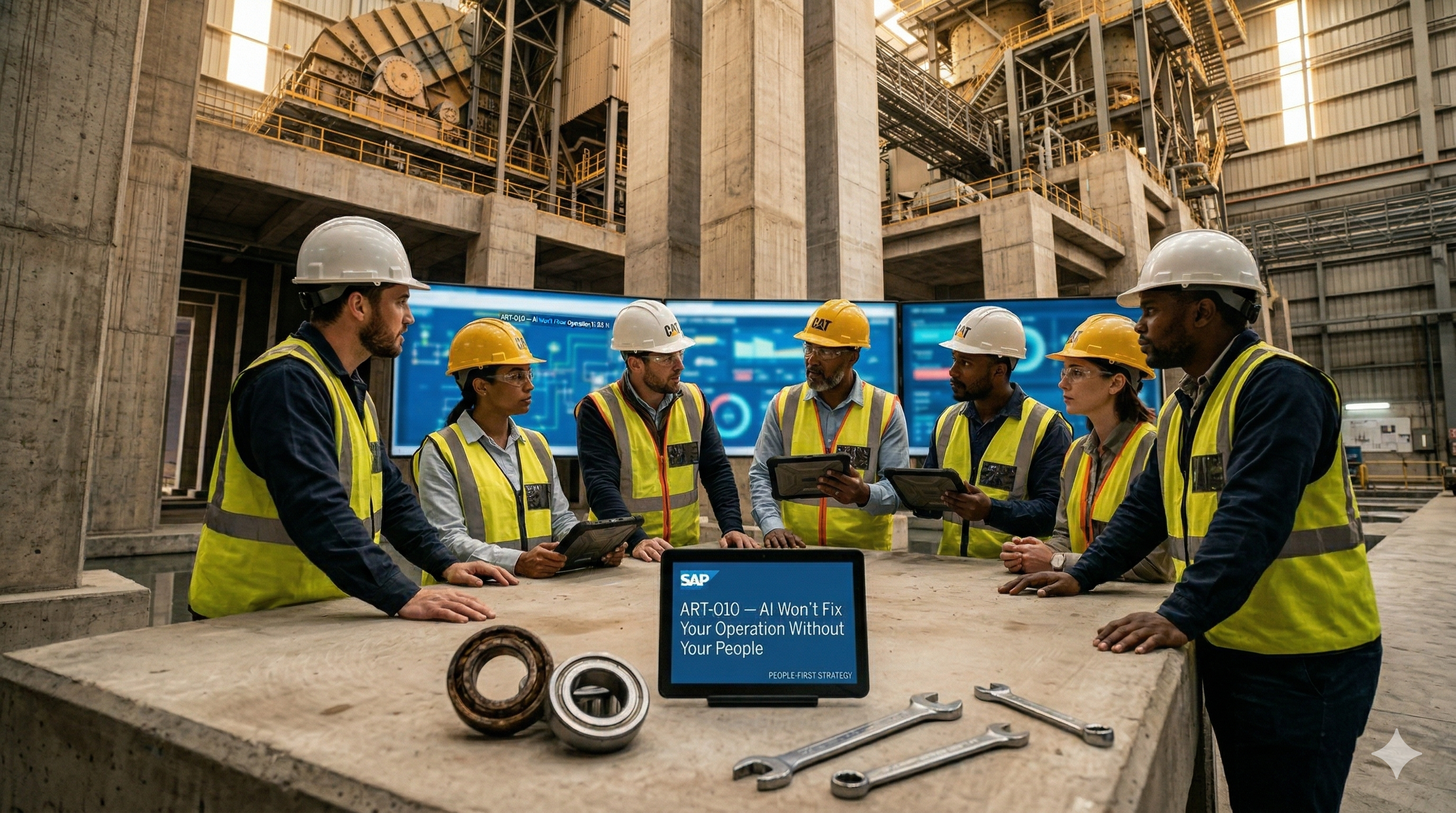
Proactive agents don't replace engineers. They amplify them.
A team of three professionals with specialized agentic software can do the analytical work that previously required fifteen. Not because the three are smarter. Because each invests their attention where nobody can substitute them, while the system does the repetitive, systematizable, high-friction work.
The question for any industrial leader isn't "should I adopt agentic AI." In 2026, that question already has an answer. The real question is: at what level is your organization operating today, and what do you need to move to the next one.
Next Steps
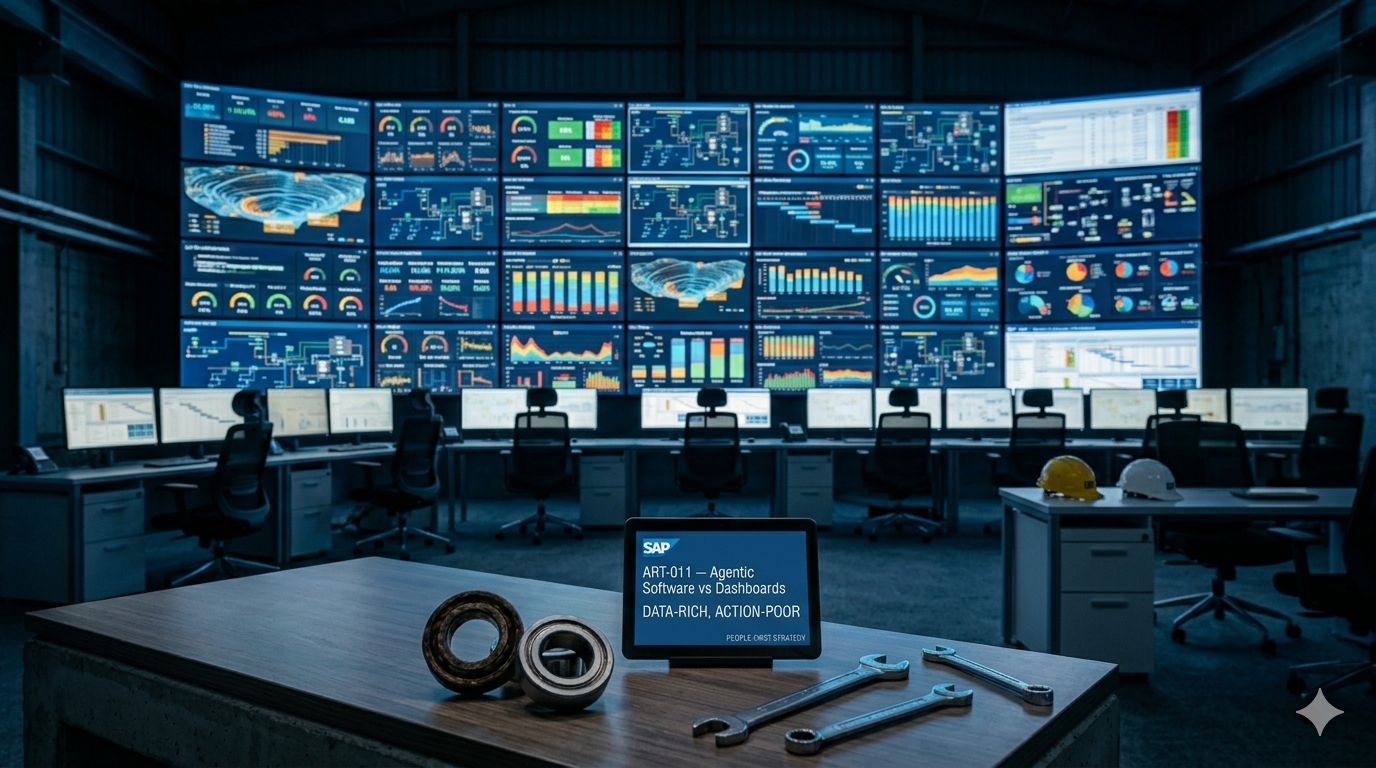
At ValueStrategy Consulting we deploy specialized agentic software for industrial operations. Not chatbots, not dashboards. Agents that execute real engineering and maintenance work, with human validation at every critical decision.
Schedule a meeting with the VSC team. We show you how this model would apply to your specific operation.
Sources: MIT Sloan Management Review x BCG, "AI at Work" (2,102 executives survey). Gartner. Microsoft/LinkedIn Work Trend Index 2025. Intelligent Mine Industry Report. Wingate et al., MIT Sloan.
Ready to talk about your operation?
30 minutes. Your specific case. Honest assessment.
Schedule a Meeting with VSCSources
- MIT Sloan Management Review x BCG — "AI at Work" survey (2,102 executives, 21 industries, 116 countries)
- Gartner — Digital initiative success rates and agentic AI hype cycle
- Microsoft/LinkedIn — Work Trend Index 2025 (75% knowledge worker AI adoption)
- Intelligent Mine — Mining equipment data analysis rates (<5%)
- Wingate et al., MIT Sloan — AI ubiquity and competitive differentiation