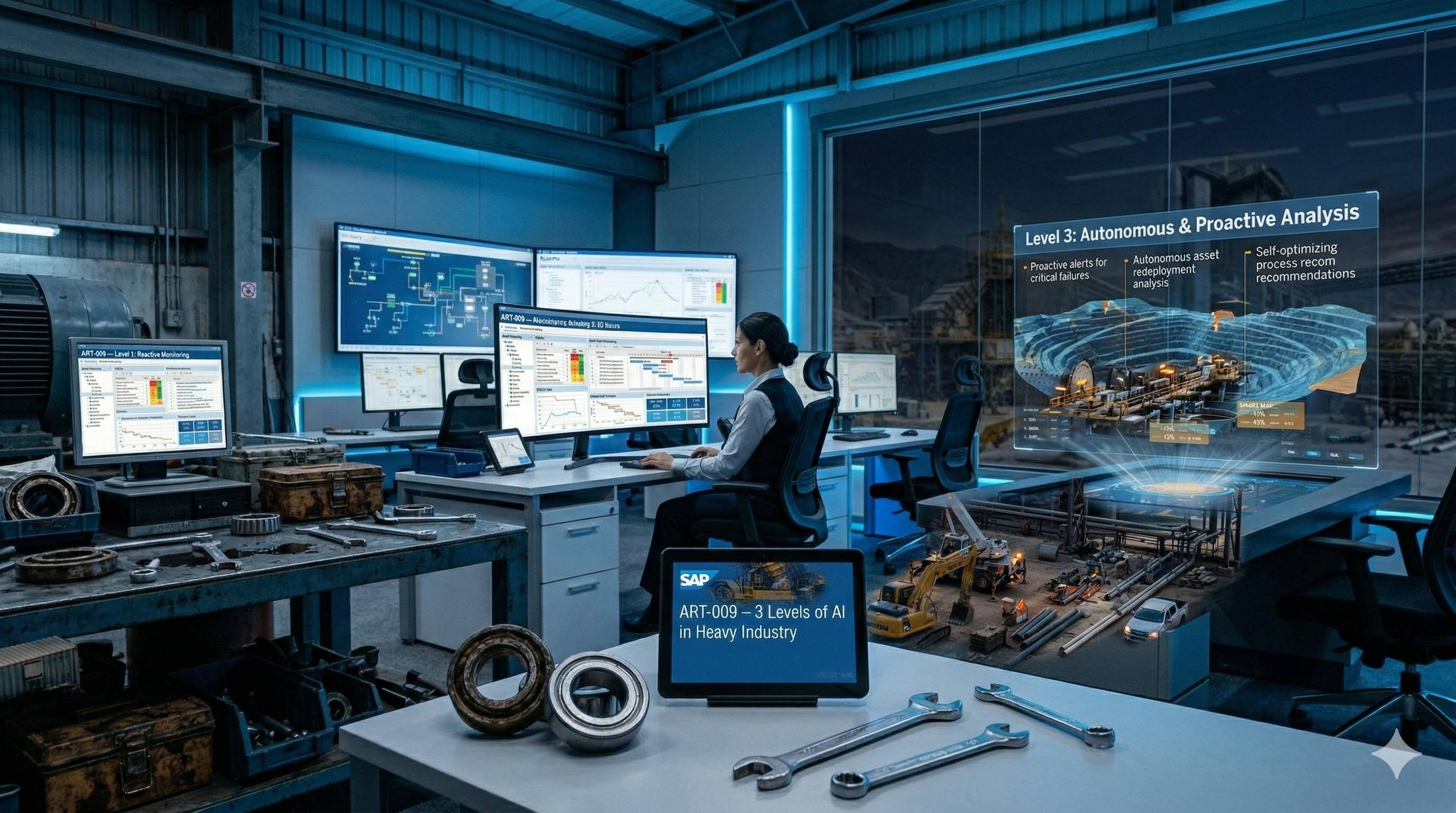
Global mining generates more data than ever. Sensors on every asset. Real-time SCADA. Dispatch systems with per-minute telemetry. And yet, less than 5% of data generated by mining equipment is analyzed for decision-making.
That's not a data problem. It's a software problem.
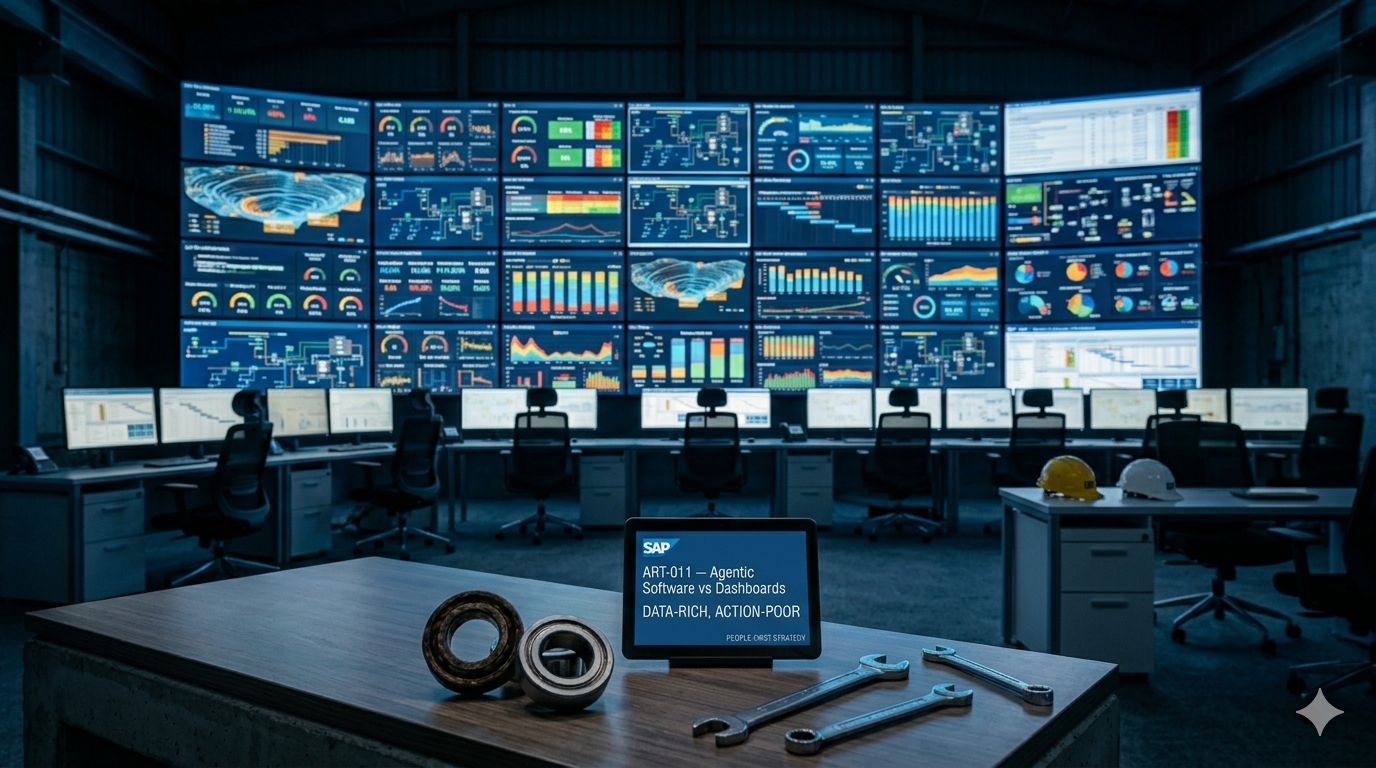
The industry spent decades collecting information and decades building dashboards to visualize it. The result: control rooms full of screens, reports nobody reads, and supervisors making decisions with the same intuition as always.
The question nobody asks out loud: if you already have the data, if you already have the dashboards, why is the average mine OEE still between 40% and 55% while manufacturing operates at 85%?
The uncomfortable answer: because showing data isn't the same as executing work.
The Dashboard Illusion
Dashboards solved a real problem. Before, getting a view of operational status took hours. Dashboards eliminated that friction.
And there the evolution stopped.
The perfectly designed dashboard shows fleet availability dropped 8 points this week. Shows maintenance OPEX exceeded budget by 14%. Shows 47 active alarms in the grinding area. All visible.
What the dashboard doesn't do is anything that follows. It doesn't investigate why availability dropped. Doesn't generate corrective action plans. Doesn't prioritize the 47 alarms by operational criticality. Doesn't update the maintenance strategy. Doesn't alert the shift supervisor which asset has the highest risk of unplanned shutdown before it happens.
An engineer does that. When they have time. When they know where to look. When they're not fighting another fire.
According to Mining Magazine, performance dashboards exist in most operations but aren't used effectively for supervisory-level decision-making. Not because supervisors are negligent. Because the dashboard presents information — then leaves them alone to transform it into action.
Data Without Action: The Real Cost
Average OEE in mining: 40-55%. World-class manufacturing: 85%+. That 30-45 percentage point gap isn't explained by lack of technology. The most advanced mines have more sensors, analytics platforms, and dashboards than most industrial plants.
According to Intelligent Mine, most mining operations can't achieve true short-interval control — the rapid analyze-and-adjust cycle that distinguishes high-performance operations. Not because they don't have data. Because the data-to-action conversion cycle depends on people who are already overloaded.
Predictive maintenance software vendors promise cost reductions of 10-30%. The documented reality in implementations without organizational change is 5-15%. The difference isn't in the algorithm. It's in whether someone acts on what the algorithm finds.
From Showing to Executing: The Difference That Matters
On one side: software that shows. Dashboards, KPIs, alerts, reports. Tools that present the operation's state and wait for someone to decide what to do.
On the other: software that executes. Systems that don't wait for someone to open a screen. That analyze asset conditions continuously, identify gaps before they become problems, generate structured analysis, prioritize action, and present the human team not a screen full of numbers — but an actionable recommendation with the context needed to decide.
Agentic software changes the logic:
Instead of: data → dashboard → engineer interprets → engineer decides → action.
The model is: data → system proactively analyzes → system identifies gap and generates solution → human validates and decides → action.
The human doesn't disappear. But the analytical work — the part consuming the most valuable time of the most qualified professionals — no longer depends on someone having time to open the right dashboard at the right moment.
Concrete Results
At ValueStrategy Consulting we live it internally. We use the same tools we deploy for clients. An asset management strategy that used to take 500 hours of manual work we deliver in 63 hours. Not because our engineers are faster. Because the work that doesn't require field judgment — data compilation, framework application, analytical structure generation — is done by the system. Experts concentrate where nobody can substitute them.
That's the model. Not prettier dashboards. Software that executes real work, with human validation at every critical decision.
Sources: Intelligent Mine Industry Report. Mining Global. Mining Magazine. ReliabilityWeb. Global Mining Review.