After billions invested in CMMS and management systems.
Most plants are still fighting fires.
The cost of that pattern doesn't show up as a line in the budget. There's no account labeled "Reactive Management Tax — USD X million." But it's there. In every emergency failure. In every extra shift. In every piece of equipment that dies before its time. In every production opportunity lost while the asset sits idle with no prior planning.
This article puts numbers to that tax.
The Cost of Fighting Fires
Reactive maintenance costs 3 to 5 times more than planned maintenance. That's Gartner. Not a theoretical estimate from a consultant — it's the result of analyzing data from hundreds of industrial operations.
The logic is simple. When an asset fails without warning:
- The intervention is urgent. Response time shrinks and the cost per labor hour rises.
- Spare parts aren't available. Express freight is paid, emergency suppliers are activated, premiums of 20% to 50% above normal price are paid.
- The downtime is unplanned. The production impact is immediate and without buffer.
- Cascade failures are more likely. An asset that dies in mid-operation can take adjacent components with it.
Planning a job reduces its cost. Executing it urgently multiplies it.
In mining operations, that multiplier has a direct dollar translation. According to Mining-Technology.com, one hour of unplanned downtime on ultra-class haul trucks and shovels costs between USD 180,000 and USD 300,000. Not per week. Per hour.
A shift failure that stops operations for six hours can mean USD 1.8 million in lost production. That's before counting the cost of emergency repair.
The Numbers the Industry Prefers Not to See
Heavy industry maintenance metrics are consistent across all sources. And they are, systematically, bad.
Average OEE in mining: 40 to 55%.
In world-class manufacturing, OEE (Overall Equipment Effectiveness) exceeds 85%. In mining, the average sits between 40% and 55%, according to Mining Global. That gap isn't geographic or technological — it's management. The difference between an operation in reactive mode and one in proactive mode is measured directly in that indicator.
Maintenance cost as percentage of RAV: 5 to 8%, when the target is 2 to 3%.
Replacement Asset Value is the benchmark for measuring whether the cost of maintaining a plant is reasonable. The industry average is between 5% and 8% of RAV, according to Engineering & Mining Journal and the Society for Maintenance and Reliability Professionals (SMRP). The target for a well-managed operation is 2% to 3%. The difference between average and target is, in many cases, several million dollars annually per operation.
Wrench time: 25 to 35%, when the target is 55 to 65%.
Wrench time is the percentage of a maintenance technician's working time effectively spent working on the asset. The industry average is 25% to 35% (SMRP). The rest is consumed in travel, searching for spare parts, waiting for permits, and unsystematized coordination. In a reactive operation, that percentage drops even further — because emergency response time fragments the workday and eliminates any possibility of efficiency.
Planned work percentage: 40 to 50%, when the target is 85 to 90%.
The percentage of planned work over total maintenance interventions is the most direct indicator of a plant's operating mode. The industry average is 40% to 50% (SMRP). That is: half or more of interventions are reactive. The target for a mature operation is 85% to 90% planned in advance.
PM/PdM to corrective ratio: 30:70 in the industry, when the target is 70:30.
On average, for every 30 preventive or predictive maintenance activities an industrial operation performs, there are 70 corrective — reactive — activities (SMRP). The target ratio is exactly the inverse. An operation working at 30:70 dedicates most of its maintenance capacity to fixing what broke, instead of preventing it from breaking.
Schedule compliance: 60 to 70%, when the target is 90%+.
Maintenance schedule compliance — how many planned jobs are executed within their assigned window — averages between 60% and 70% in the industry (SMRP). When the schedule isn't met, preventive jobs are deferred. And each deferral increases the probability of failure. It's a self-feeding cycle.
These aren't data from poorly managed plants. They're industry averages. They're the norm, not the exception.
Why Reactive Mode Persists
If the data is so clear and the consequences so costly, the logical question is: why do most operations continue working in reactive mode?
There are four reasons that repeat in any honest diagnosis.
1. Urgency always beats planning.
In a reactive operation, the maintenance team always has a fire to put out. Planning meetings are canceled because there's an emergency. Scheduled PMs are deferred because there's an urgent corrective. The cycle sustains itself. Urgency displaces planning, and the lack of planning generates more urgencies.
2. Failures are misattributed.
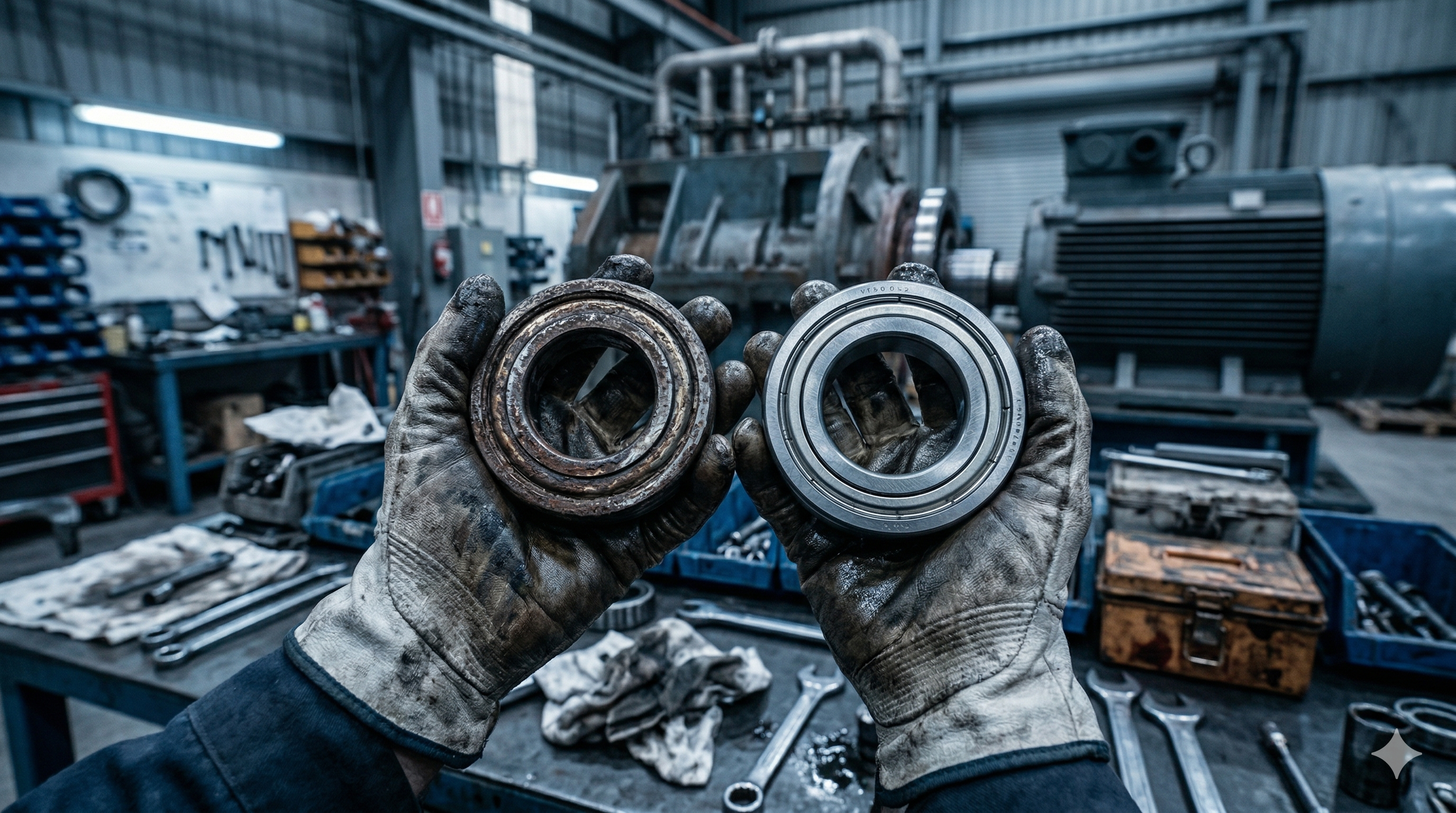
According to ReliabilityWeb, between 30% and 50% of bearing failures are not due to component defects, but to incorrect installation or inadequate lubrication. That is: the failure isn't a spare parts quality problem — it's a procedure problem. When FMECA isn't done correctly, when root causes aren't documented, when post-failure analysis doesn't exist, the industry keeps buying the same spare parts and making the same mistakes. Spending more, learning less.
3. The CMMS doesn't solve the cultural problem.
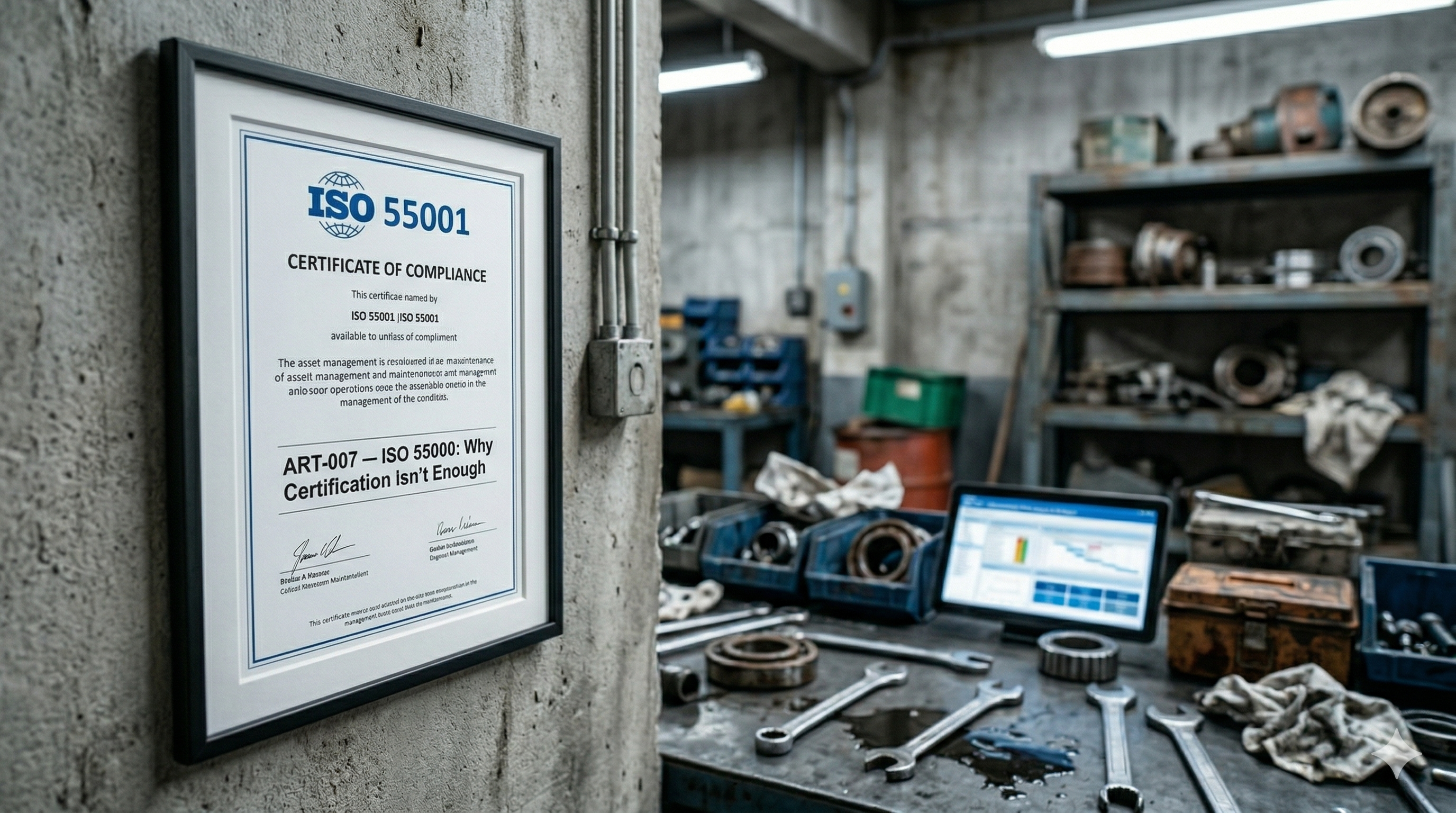
Many operations have SAP PM implemented. They have work order histories. They have the ability to generate KPI reports. And they still operate reactively, because the system isn't configured to manage by criticality, because PMs don't reflect FMECA recommendations, because nobody closed the loop between reliability analysis and maintenance execution. Having a CMMS is not having a maintenance strategy.
4. There's no strategy — only habits.
The deepest reason is the simplest: most operations never explicitly defined their criticality-based maintenance strategy. There's no document that says: these assets are Critical A, for this reason, and the maintenance policy is this. Without that foundation, maintenance is managed by inertia — doing what was always done, responding to whatever fails first.
From Reactive to Proactive: The Path
The path exists. It's not new. The methodologies are known: RCM, FMECA, criticality analysis, PdM. ISO 55000 provides the framework. SMRP best practices document the benchmarks.
The problem isn't the methodology. The problem is the time it takes to implement it correctly.
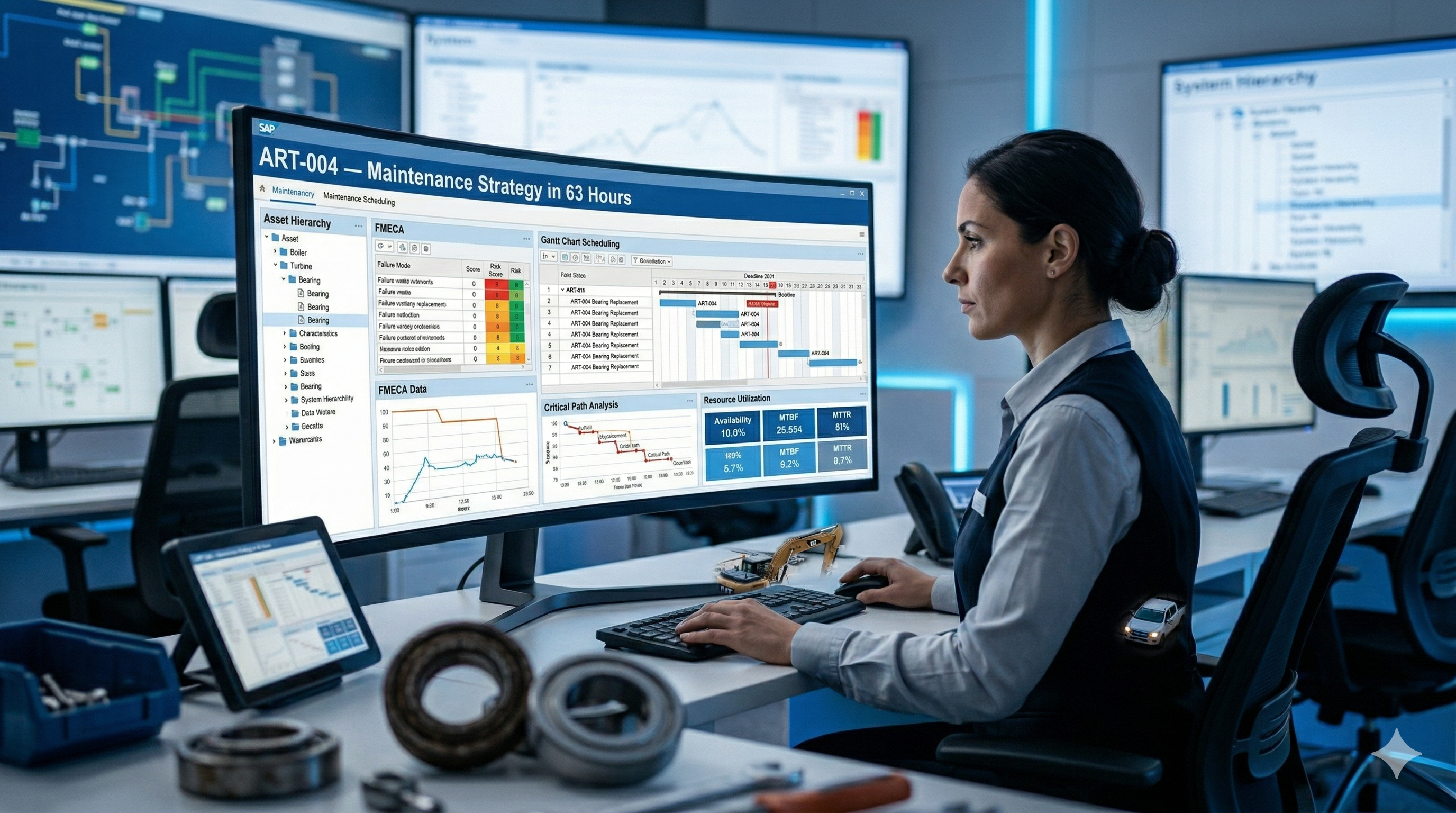
A complete maintenance strategy — with FMECA by asset, criticality ranking, maintenance policy definition by criticality level, PM structure in SAP PM, and tracking indicators — takes, in the traditional method, between 300 and 500 hours of engineering work. That assumes the reliability team exists, has available time, and no other urgency displaces the project.
In practice, that work gets fragmented over months. It's done partially. It gets interrupted. And many times, by the time it's implemented in the CMMS, the baseline data has already changed.
The result is that operations that know perfectly well they need a criticality-based maintenance strategy keep deferring its implementation because day-to-day operations don't leave room.
There's a different way to solve that problem: deliver the complete strategy in 63 hours. Not 500.
Results When Done Right
When an operation exits reactive mode — when it correctly implements a criticality-based strategy, with PMs aligned to FMECA and execution data entering SAP PM — the numbers change.
Maintenance cost as a percentage of RAV drops from the 5-8% range to the 2-3% target. In an operation with USD 500 million in assets, that's between USD 10 and USD 25 million annually in difference.
Wrench time goes up. When jobs are planned, when spare parts are available, when permits are managed in advance, technicians work on assets instead of searching for information. The same team does more value work in the same shift.
OEE improves. Less unplanned downtime means more production hours. In a mine operating near the margin, those hours are the difference between a profitable quarter and one that isn't.
And the reactive-proactive ratio inverts. An operation working at 30:70 can reach 60:40 in the first year and approach the 70:30 target in the second. It's not a magical process — it's the result of having a documented strategy, implemented in the CMMS, and executed with discipline.
VSC delivers that strategy. Complete, structured by criticality, and ready to load into SAP PM — not as a PDF, but as implementable data.
Maintenance strategy in 63 hours, not 500.
The Diagnosis Your Operation Needs
The first step to exiting reactive mode is understanding exactly where your operation stands. Not intuitively — measured.
Ten dimensions. Fifty evaluation points. At the end, a clear picture: which areas of your maintenance strategy have critical gaps, and what's the estimated cost of not resolving them.
That diagnosis exists. It's called the Maintenance Maturity Checklist. It's the tool VSC uses to begin all its Asset Management Strategy engagements.
If your operation is paying the silent tax of reactive maintenance, the first step isn't a 12-month project. It's understanding with precision the size of the problem.
Ready to talk about your operation?
30 minutes. Your specific case. Honest assessment.
Schedule a Meeting with VSC